Introduction
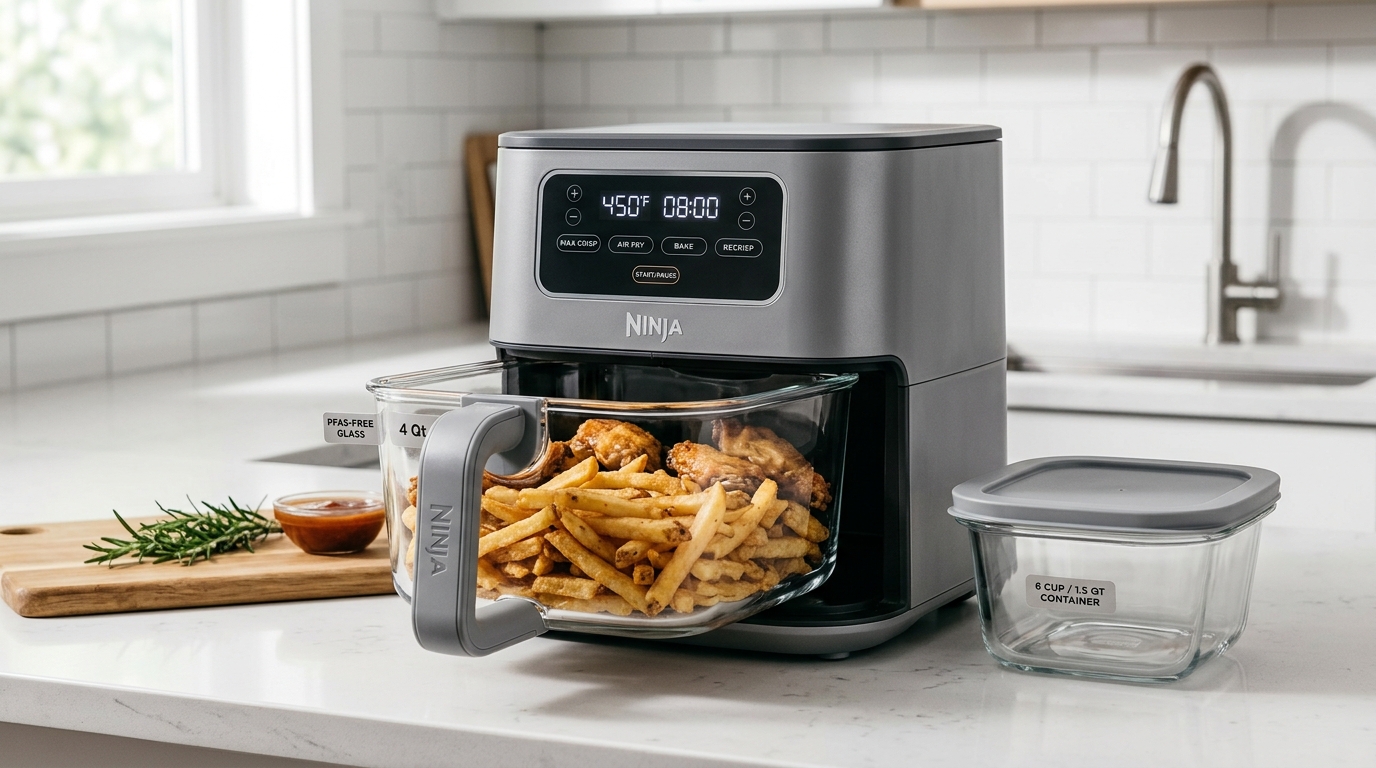
Air fryers have become a fairly established category of kitchen appliance over the past several years, but material choices within that category continue to evolve. The Ninja Crispi Glass Air Fryer takes a slightly different approach compared to many traditional air fryers by using PFAS-free glass containers instead of the non-stick coated metal baskets found in most models. Available in grey under model number FN101GY, this 4-in-1 appliance offers crisping, baking, air frying, and recrisping functions, along with a maximum temperature of 450°F and two container sizes, a 4-quart and a 6-cup option.
This article takes a closer look at what the Ninja Crispi actually offers, how it can be used across different cooking situations, who tends to find this kind of appliance useful, and a few practical considerations worth thinking about before choosing one. As with any kitchen appliance, understanding the specifics helps in making a decision that fits individual cooking habits.
Key Features
PFAS-Free Glass Containers
One of the more distinctive aspects of this air fryer is its use of glass containers rather than the metal, non-stick coated baskets typically found in most air fryers on the market. These containers are described as PFAS-free, which has become an increasingly common consideration for consumers who prefer to avoid certain synthetic coatings sometimes used in traditional non-stick cookware. Glass also offers the practical benefit of being see-through, allowing users to monitor food during cooking without opening the appliance.
4-in-1 Functionality
The appliance includes four core functions: crisping, baking, air frying, and recrisping. This combination is designed to cover a range of common cooking needs, from preparing crispy vegetables or proteins to baking smaller items, all within a single appliance rather than requiring separate tools for each task.
Recrisp Function
The dedicated recrisp setting is specifically designed for reheating leftovers or previously cooked food in a way that restores some of the original crispiness, rather than simply warming food through, which can often leave previously crispy items soft or soggy when reheated using conventional methods like a microwave.
Maximum Temperature of 450°F
A maximum cooking temperature of 450°F places this appliance within a fairly standard range for air fryers, generally sufficient for achieving browning and crisping across a wide variety of foods, from frozen items to fresh vegetables and proteins.
Dual Container Sizes: 4-Quart and 6-Cup
The inclusion of two differently sized glass containers, a 4-quart option and a smaller 6-cup option, adds a degree of flexibility depending on portion size. The larger container is generally suited to bigger batches or family-style cooking, while the smaller container may be more appropriate for individual servings or smaller side dishes.
Compact and See-Through Design
Because the containers are made of glass, the overall design tends to have a different visual profile compared to typical opaque air fryer baskets. This can make it easier to check on food progress visually during the cooking process without interrupting the cooking cycle.
How It Can Be Used
Given its combination of functions and dual container sizes, this appliance tends to be used in a variety of everyday cooking situations.
Everyday air frying. The core air fry function can be used for common dishes like crispy vegetables, chicken, or frozen foods such as fries or nuggets, using hot air circulation to achieve a crisp exterior with less oil than traditional deep frying.
Reheating leftovers. The recrisp function is particularly suited to bringing previously cooked, crispy foods back to a more appealing texture, which is a common pain point when reheating items like fried chicken, roasted vegetables, or pizza using a microwave.
Small-batch baking. The baking function allows for preparing smaller baked goods or dishes, which can be convenient for those who don’t want to heat up a full-size oven for smaller portions.
Portion-controlled cooking. With both a 4-quart and 6-cup container available, users can choose the appropriate size depending on whether they’re cooking for a full meal, a family, or a smaller individual portion.
Visual monitoring during cooking. Because the containers are glass, some users find it convenient to visually track browning or crisping progress without needing to pause the appliance to check.
Who It May Be Suitable For
This type of appliance tends to appeal to a fairly specific range of users, including:
- Individuals interested in PFAS-free cookware, as part of a broader preference for avoiding certain synthetic coatings often found in traditional non-stick appliances.
- Those who frequently reheat leftovers and want a way to restore crispiness rather than relying on a microwave, which tends to soften previously crispy foods.
- Smaller households or individuals who may benefit from the smaller 6-cup container option for single servings, while still having access to the larger 4-quart size when needed.
- People with limited counter space looking for a relatively compact air fryer option compared to larger multi-basket models.
- Anyone curious about glass-based cookware as an alternative to more traditional metal, non-stick air fryer baskets.
On the other hand, those who regularly cook very large batches for bigger families or gatherings might find the 4-quart capacity somewhat limiting compared to larger-capacity air fryers designed specifically for bigger households.
Important Things to Consider
Before choosing this type of appliance, a few practical points are worth considering.
Glass container durability. Glass, while generally durable when used appropriately, can behave differently than metal in terms of impact resistance, so it’s worth handling containers carefully and following any specific care instructions provided by the manufacturer regarding cleaning and handling.
Capacity for larger households. With a 4-quart maximum container size, this appliance may not be ideal for very large families or those who frequently cook bigger batches at once, compared to air fryers with larger basket capacities.
Two containers to manage. Having both a 4-quart and 6-cup container adds flexibility but also means there are two separate pieces to store and keep track of, compared to single-basket air fryer designs.
Temperature range for specific recipes. A 450°F maximum temperature is generally sufficient for most air frying tasks, though it’s worth checking specific recipes that may call for higher temperatures to confirm compatibility.
Learning the recrisp setting. Since the recrisp function is a somewhat specialized feature compared to standard air frying, it may take a bit of experimentation to find optimal times and temperatures for different types of leftover foods.
Comparison of General Categories
Air fryers as a broader category can generally be grouped a few different ways.
Traditional basket-style air fryers typically use a pull-out metal basket with a non-stick coating, and remain the most common design found across the market.
Glass or alternative-material air fryers, like the Ninja Crispi, use different container materials, often marketed around being PFAS-free or offering visual monitoring benefits during cooking.
Single-function versus multi-function models represent another distinction, with basic air fryers offering just the core air frying setting, while multi-function models add capabilities like baking, dehydrating, or in this case, a dedicated recrisp setting.
Capacity-based categories also apply, with smaller 2 to 4-quart models generally suited to individuals or smaller households, while larger 6-quart and above models, sometimes featuring dual baskets, are aimed at bigger families or batch cooking needs.
The right category ultimately depends on household size, material preferences, and how many specialized functions, like recrisping, a person expects to use on a regular basis.
Frequently Asked Questions
Is glass safe to use in an air fryer at high temperatures? Air fryer manufacturers that use glass containers generally design them to withstand the appliance’s specific temperature range, though it’s important to follow manufacturer guidance regarding safe use and avoid exposing glass containers to sudden extreme temperature changes.
What is the difference between air frying and recrisping? Air frying generally refers to cooking raw or frozen food using circulated hot air, while recrisping is typically optimized for reheating already-cooked food in a way that restores texture rather than cooking it from scratch.
Can both container sizes be used at the same time? This generally depends on the specific appliance design, and it’s best to check the manufacturer’s instructions to confirm whether simultaneous use of both containers is supported or whether they are meant to be used interchangeably rather than together.
Is this appliance suitable for baking full-size dishes? Given the container sizes involved, this type of air fryer is generally better suited to smaller baked items rather than large dishes that would typically require a full-size oven.
How does cleaning glass containers compare to metal baskets? Glass containers are often noted for being easy to clean and may be dishwasher safe, though it’s worth checking specific care instructions, since manufacturer guidance can vary by model.
Does PFAS-free mean the appliance is entirely free of non-stick coatings? PFAS-free generally refers to the absence of a specific group of synthetic chemicals sometimes used in non-stick coatings, rather than an indication that no coating or surface treatment exists at all. Specific material details are generally listed in the product’s official specifications.
Conclusion
The Ninja Crispi Glass Air Fryer offers a somewhat different take on the standard air fryer category by incorporating PFAS-free glass containers, a dedicated recrisp function, and dual container sizes to accommodate different portion needs. Its 4-in-1 functionality, reaching a maximum of 450°F, is designed to handle everyday tasks like crisping, baking, air frying, and reheating leftovers with improved texture.
For individuals or smaller households interested in alternative cookware materials and flexible portion sizing, this type of appliance presents a fairly specific set of advantages. At the same time, those needing larger batch capacity may want to weigh this against bigger-capacity air fryer options. As always, the right choice depends on individual cooking habits, household size, and material preferences.