Introduction
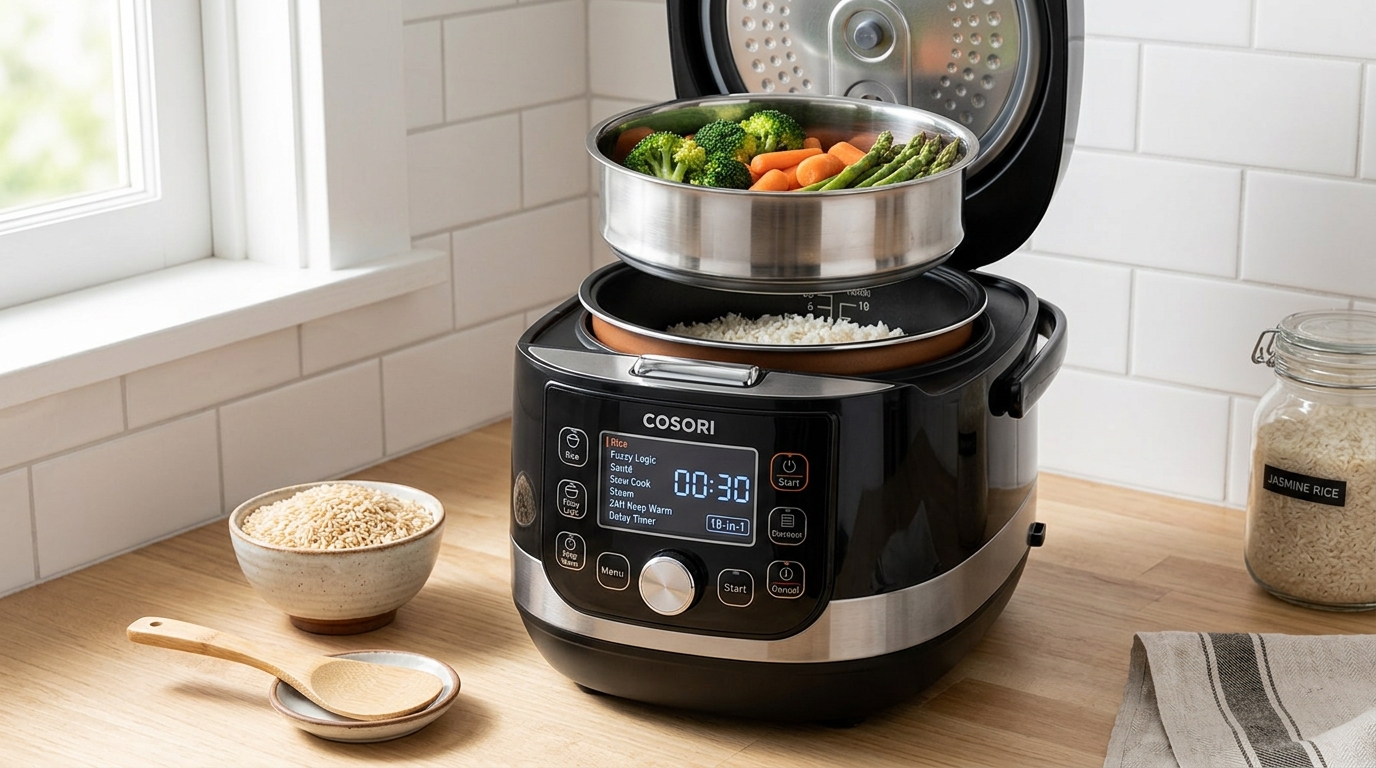
Rice cookers have come a long way from simple single-function devices, and the Cosori 10-Cup Rice Cooker is a good example of how far the category has evolved. Built around fuzzy logic technology, this appliance combines an 18-in-1 function set with a ceramic-coated inner pot, a stainless steel steamer basket, a 24-hour keep-warm setting, and a delay timer, all housed in a stainless steel and black exterior. Its 10-cup capacity places it toward the larger end of the household rice cooker category, generally suited to families or anyone who regularly cooks larger portions of rice or grains.
This article breaks down what the Cosori rice cooker offers, the different ways it can be used across a typical kitchen, who tends to benefit most from this kind of appliance, and some practical factors worth thinking through before choosing one. The aim here is to provide clear, balanced information rather than a sales pitch.
Key Features
Fuzzy Logic Technology
One of the more distinctive features of this appliance is its use of fuzzy logic technology. In general terms, fuzzy logic rice cookers are designed to make small, automatic adjustments to cooking time and temperature based on factors like rice type and moisture content, rather than relying on a single fixed cooking cycle for every setting. This is intended to produce more consistent results across different types of rice and grains compared to more basic cookers.
18-in-1 Functionality
Beyond standard rice cooking, the appliance is described as offering 18 different functions, which typically span settings for various rice types, grains, porridge, soup, sauté, slow cooking, steaming, and other common cooking modes. This kind of broad function range is generally intended to reduce the need for multiple separate kitchen appliances.
Ceramic-Coated Inner Pot
The inner cooking pot uses a ceramic, non-stick coating, which is often chosen as an alternative to traditional non-stick coatings. Ceramic coatings are generally marketed around ease of cleaning and food release, along with being a different material option for consumers who prefer to avoid certain older non-stick chemical coatings.
Stainless Steel Steamer Basket
An included stainless steel steamer basket allows the appliance to be used for steaming vegetables, proteins, or other foods, either as a standalone function or in combination with rice cooking, depending on the specific recipe and setup.
24-Hour Keep Warm Setting
The keep-warm function is rated for up to 24 hours, which is a notably longer duration compared to many basic rice cookers. This kind of extended keep-warm capability is generally useful for households where mealtimes are spread out or unpredictable, since it allows rice to remain at a safe serving temperature for an extended period after cooking finishes.
Delay Timer
A delay timer function allows users to schedule cooking to begin at a later time, which can be useful for having rice ready at a specific point in the day, such as timing it to finish right around a typical dinner hour, without needing to start the cooking process manually at that exact time.
Sauté and Slow Cook Functions
In addition to rice-specific settings, the appliance includes sauté and slow cook modes, which extend its use beyond rice preparation into broader one-pot cooking, similar to how a multi-cooker might be used for browning ingredients or preparing slow-cooked dishes.
10-Cup Capacity
A 10-cup capacity (referring to uncooked rice measurement in most rice cooker labeling conventions) generally translates to a fairly large yield once cooked, making this size suitable for bigger families, meal preppers, or anyone who frequently cooks in bulk.
How It Can Be Used
Given the range of included functions, this appliance tends to be used in a variety of ways within a typical kitchen.
Everyday rice and grain preparation. The core function remains cooking rice, and the fuzzy logic system is designed to help adjust for different rice varieties, from white and brown rice to more delicate grains.
Batch cooking for the week. Given its larger 10-cup capacity, this type of appliance is often used for preparing large batches of rice or grains at once, which can then be portioned out for meals throughout the week.
Soups and porridge. Many multi-function rice cookers, including fuzzy logic models like this one, include dedicated settings for porridge or soup, which rely on different time and temperature profiles compared to standard rice cooking.
Steaming vegetables or proteins. Using the included steamer basket, the appliance can be used to steam a variety of foods separately from or alongside the rice cooking process.
Slow-cooked dishes. The slow cook setting extends the appliance’s use into longer-cooking meals, similar to how a traditional slow cooker might be used for stews or braises.
Scheduled meal timing. The delay timer function is often used by people with predictable daily schedules who want rice or grains ready at a specific time without needing to start the appliance manually.
Who It May Be Suitable For
This type of appliance tends to appeal to a fairly broad range of users, including:
- Larger families who regularly cook bigger batches of rice or grains and want a larger-capacity appliance to match.
- Households that eat rice frequently and want more precise, consistent results across different rice varieties, which fuzzy logic technology is generally designed to help with.
- People with busy or irregular schedules who benefit from the delay timer and extended keep-warm functions.
- Home cooks looking to consolidate appliances, given the wide range of functions beyond basic rice cooking.
- Anyone interested in ceramic-coated cookware as an alternative material option compared to more traditional non-stick coatings.
On the other hand, individuals or smaller households who only cook rice occasionally, or who need a much smaller capacity, might find a more basic or compact rice cooker a better fit, both in terms of cost and available kitchen space.
Important Things to Consider
There are a few practical points worth thinking through before choosing a larger, multi-function rice cooker like this one.
Counter and storage space. A 10-cup capacity appliance is generally larger than basic rice cookers, and it’s worth measuring available kitchen space beforehand to confirm it fits comfortably.
Learning the full function set. With 18 different functions, there can be a bit of a learning curve involved in understanding which setting is appropriate for a given dish, particularly for users who are used to simpler, single-function rice cookers.
Ceramic coating maintenance. While ceramic coatings are generally easy to clean, they can still be sensitive to metal utensils or abrasive cleaning tools, so using appropriate utensils can help maintain the coating over time.
Cost relative to simpler models. Multi-function appliances with fuzzy logic technology and extended feature sets are often priced higher than basic rice cookers, so it’s worth weighing how many of the included functions a household would realistically use on a regular basis.
Cooking capacity for smaller households. For those cooking primarily for one or two people, a 10-cup capacity may be considerably more than necessary, and a smaller model might be more practical.
Comparison of General Categories
Rice cookers generally fall into a few broad categories based on both capacity and technology.
Basic rice cookers typically offer a single cooking function with simple on/off or basic warm settings, without fuzzy logic or extensive programming options. These tend to be more affordable and simpler to operate.
Fuzzy logic rice cookers, like this Cosori model, use sensor-based adjustments to fine-tune cooking time and temperature for different rice types, generally aiming for more consistent results across a wider range of grains.
Multi-function cookers extend beyond rice cooking into functions like sauté, slow cooking, steaming, and soup-making, positioning the appliance as a broader kitchen tool rather than a single-purpose device.
Capacity-based distinctions also apply, with smaller 3 to 6-cup models suited to individuals or smaller households, mid-range 6 to 8-cup models fitting typical family use, and larger 10-cup and above models generally aimed at bigger households or batch cooking needs.
Choosing between these categories generally comes down to how often rice or grains are prepared, how many additional functions a household expects to use, and how much capacity is realistically needed on a regular basis.
Frequently Asked Questions
What does fuzzy logic actually do in a rice cooker? Fuzzy logic technology generally refers to a sensor-based system that makes small automatic adjustments to cooking time and temperature based on factors like rice type, aiming to produce more consistent results compared to a single fixed cooking cycle.
Is ceramic coating better than traditional non-stick coatings? Ceramic coatings are generally considered a different material option rather than a straightforward upgrade, often chosen for ease of cleaning and as an alternative to certain traditional non-stick chemical coatings. Preferences can vary depending on individual priorities.
How long can rice stay on the keep-warm setting? This particular model is rated for up to 24 hours of keep-warm functionality, though for food safety and quality reasons, many users still prefer consuming rice within a shorter window after cooking.
Can this rice cooker handle grains other than rice? Many multi-function rice cookers with an 18-in-1 style function set are designed to handle a range of grains beyond rice, such as quinoa or oats, though specific settings and results can vary by grain type.
Is the delay timer safe to use with all ingredients? Delay timers are generally intended for shelf-stable ingredients like dry rice, and it’s advisable to avoid using delay settings with perishable ingredients that shouldn’t sit at room temperature for extended periods before cooking begins.
Does this rice cooker require special cleaning steps? The ceramic-coated inner pot and steamer basket generally require standard cleaning with non-abrasive tools, though it’s best to follow the specific care instructions included with the appliance.
Conclusion
The Cosori 10-Cup Rice Cooker represents a fairly comprehensive approach to rice and grain cooking, combining fuzzy logic technology, an 18-in-1 function set, a ceramic-coated inner pot, and conveniences like a 24-hour keep-warm setting and delay timer into a single appliance. For larger households, frequent rice eaters, or anyone looking to consolidate multiple cooking functions into one device, this type of product offers a fairly extensive set of capabilities.
At the same time, its larger capacity and broader function set may be more than what smaller households or occasional rice cookers actually need. As with most kitchen appliances, the right fit depends on how often rice and grains are prepared, how much kitchen space is available, and how many of the included functions would realistically get regular use.